


 Tel : +86 18150976625
 Email : Market@MicrofiberLeather.com
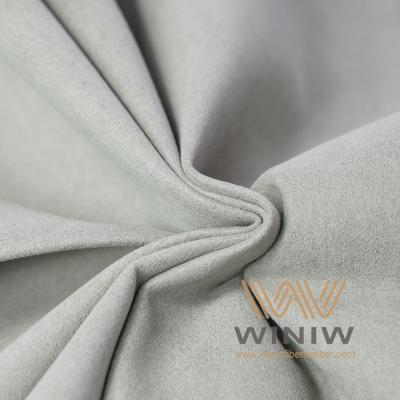
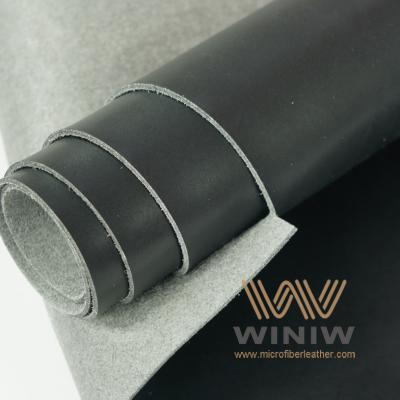
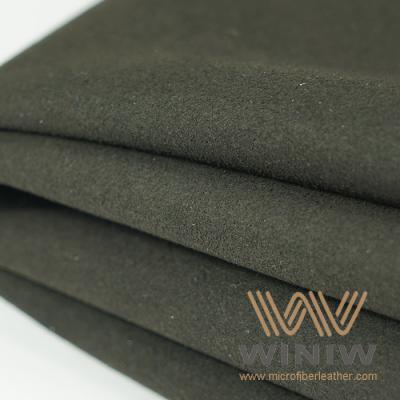
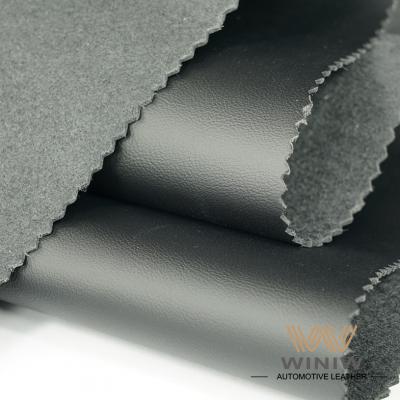
You encounter synthetic leather fabric often in daily life. People call it faux leather or vegan leather. Manufacturers use PU, PVC, microfiber, or silicone to create it, which means non-use of animals. Synthetic leather fabric costs less than real leather and appeals to many for ethical reasons.
|
Year |
Synthetic Leather Market Size (USD) |
Predicted Market Size (USD) |
CAGR (%) |
|---|---|---|---|
|
2025 |
86.22 billion |
7.0 |
|
|
2035 |
49.10 billion |
103.91 billion |
7.78 |
Understanding Synthetic Leather Fabric and Its Everyday Uses
-
Synthetic leather, also known as faux or vegan leather, is a man-made alternative to real leather, made from materials like PU and PVC.
-
Choosing synthetic leather supports ethical values by avoiding animal products and often comes at a lower cost than genuine leather.
-
Synthetic leather is versatile and used in fashion, furniture, and automotive applications, offering durability and easy maintenance.
What Is Synthetic Leather Fabric?
Definition and Alternative Names
You might notice synthetic leather fabric in many products you use every day. This material is a man-made alternative to animal leather. Manufacturers create it by coating a fabric base, such as polyester or cotton, with a layer of plastic. The most common plastics used are polyurethane (PU) and polyvinyl chloride (PVC). These coatings give synthetic leather its smooth, leather-like appearance and feel.
Synthetic leather fabric goes by many names in the industry. You may see these terms used interchangeably:
-
Faux leather
-
Pleather
-
Vegan leather
-
Naugahyde
-
Synthetic leather
-
Artificial leather
-
Fake leather
-
Ersatz leather
-
Leatherette
-
Imitation leather
Each name highlights a different aspect of the material, but all refer to the same basic concept: a leather substitute made without animal products. The core characteristics of synthetic leather fabric include water resistance, a uniform texture, and a wide range of available colors and finishes. Manufacturers often add pigments, plasticizers, and stabilizers to enhance durability and appearance. Most synthetic leather fabric relies on petroleum-based components, such as PU resin and polyester backing.
Synthetic Leather vs. Real Leather
When you compare synthetic leather to real leather, you will notice several important differences. These differences affect how each material looks, feels, and performs.
|
Property |
Genuine Leather |
|
|---|---|---|
|
Breathability |
Highly breathable due to the porous collagen structure. Allows water vapor to pass through, enhancing comfort. |
Non-porous and non-breathable. Traps moisture and heat. |
|
Moisture Absorption |
Hygroscopic; will absorb small amounts of moisture. A drop of water will slowly soak in. |
Largely waterproof. Water will bead up and roll off the surface. |
|
Thermal Response |
Chars at high temperatures (>200°C) and emits an odor similar to burning hair due to the protein content. |
Melts and often burns rapidly, emitting a strong, acrid chemical odor of burning plastic. |
|
Durability & Aging |
Extremely durable. Develops a natural patina with age, enhancing its aesthetic appeal. Resists tearing and puncture. |
Less durable. Prone to cracking, peeling, and delamination over time, especially with UV exposure. Does not develop a patina. |
|
Flexibility & Texture |
Soft, supple, and flexible with a natural, slightly uneven texture. Wrinkles under pressure, much like skin. |
Can feel stiff and plastic-like, though modern PU can be quite soft. Has a smooth, uniform texture. Depresses under pressure but retains its shape. |
|
Scent |
Possesses a rich, distinct, earthy aroma that is characteristic of tanned hide. |
Has a noticeable plastic or chemical smell, a result of the polymers and plasticizers used in its manufacture. |
You will also see a difference in cost. Synthetic leather usually costs less than real leather. For example:
|
Type of Leather |
Cost per Square Foot |
|---|---|
|
Synthetic Leather |
|
|
Genuine Leather |
$2 - $5 |
|
Full-Grain Leather |
$5 - $12 |
Synthetic leather fabric offers a budget-friendly option for many products. You can find it in clothing, furniture, and car interiors. Real leather, especially full-grain, costs more because of its natural origin and longer lifespan.
Ethical and environmental concerns also play a role in your choice. Real leather production requires animal farming and tanning, which uses large amounts of water and chemicals. Cattle farming for leather contributes to about 15% of global greenhouse gas emissions. The tanning process can pollute water sources and harm ecosystems. Synthetic leather avoids animal use, which appeals to many consumers. However, it relies on petroleum-based materials and can have a shorter lifespan. Real leather products can last 10 to 20 years or more, while faux leather items often last 3 to 5 years.
Tip: When you choose between synthetic leather and real leather, consider your priorities. If you value animal-free products and lower cost, synthetic leather fabric may suit your needs. If you want maximum durability and a natural look, real leather might be the better choice.
You will also encounter different types of synthetic leather, such as PU, PVC, microfiber, and silicone-based options. Each type has unique properties and uses, which you will learn about in the next section.
How Is Synthetic Leather Made & Types of Faux Leather Fabric
Manufacturing Process Overview
You can understand synthetic leather fabric better when you know how manufacturers produce it. The process starts with a base material, usually cotton or polyester. Manufacturers source these textiles from specialized facilities. They then create the plastic layer, either polyurethane (PU) or polyvinyl chloride (PVC), by mixing chemicals to form the desired polymer.
You see the manufacturing process unfold in four main steps:
-
Obtaining the Base Material: Manufacturers select cotton or polyester as the foundation.
-
Formulating the Plastic: They combine chemicals to produce PU or PVC.
-
Binding the Materials: The plastic melts and bonds to the textile base, forming a flexible sheet.
-
Cutting and Preparing the Fabric: Workers cut the finished material into shapes for clothing, furniture, or car interiors.
Note: The shift toward water-based and solvent-free technologies has made synthetic leather production more eco-friendly. Nanotechnology now improves moisture permeability and wear resistance, creating high-performance fabrics.
You notice that synthetic leather production uses less water than real leather. Real leather requires about 240 liters per square meter, while synthetic leather uses less. However, synthetic leather emits volatile organic compounds (VOCs) and contributes to microplastic pollution. Real leather production uses chemicals that can pollute water sources. Synthetic leather lasts 3 to 5 years, while real leather can last 10 to 20 years. This shorter lifespan means synthetic leather products may end up in landfills sooner.
|
Type of Leather |
Water Usage (liters per square meter) |
Average CO2 Emissions (kg per square meter) |
|---|---|---|
|
Real Leather |
240 |
17.0 |
|
Synthetic Leather |
Less than real leather |
15.8 |
You also see regulatory standards that guide synthetic leather production. The EU REACH Regulation restricts harmful chemicals, and EPA guidelines help reduce VOC emissions.
|
Regulatory Standard |
Description |
|---|---|
|
EU REACH Regulation |
Restricts the use of harmful chemicals in production |
|
EPA Guidelines |
Provides guidance for reducing VOC emissions |
Synthetic leather, made from PVC and PU, has limited recycling options. Most products end up in landfills, persisting for hundreds of years. Real leather decomposes within 10 to 12 months under industrial composting. Synthetic leather can release microplastics and toxic chemicals as it breaks down.
Types of Synthetic Leather (PU, PVC, Microfiber, Silicone)
You encounter several types of synthetic leather, each with unique properties and uses. Manufacturers choose the type based on the product’s requirements.
|
Synthetic Leather Type |
Defining Properties |
Key Characteristics |
Environmental Impact |
|
|---|---|---|---|---|
|
PU (Polyurethane) |
Polyurethane coating on fabric base (often polyester) |
Sleek, glossy finish; realistic leather look; versatile in colors and textures; animal-friendly |
Fashion items like jackets, handbags, shoes |
More eco-friendly than PVC; animal-free |
|
PVC (Polyvinyl Chloride) |
Polyvinyl chloride coating on textile base (cotton or polyester) |
Shiny, sturdy, easy to clean; prone to cracking and peeling over time |
Furniture, automotive interiors, pleather goods |
High environmental concerns; non-biodegradable; toxic dioxin release |
|
Microfiber |
Ultra-fine synthetic fibers bonded to a base |
Soft, lightweight, breathable; high durability; mimics real leather texture |
High-end fashion items, upholstery, automotive interiors |
Lower environmental impact than PVC; animal-free |
|
Silicone-Based Synthetic Leather |
Silicone coating on fabric base |
High resistance to UV, moisture, temperature; durable; water and stain resistant; minimal maintenance |
Automotive interiors, home furniture, footwear, consumer electronics, medical equipment |
Eco-friendly; lower environmental impact; free from toxic chemicals and animal products |
You see PU leather most often in handbags, garments, shoes, and upholstery. PVC leather appears in car seat covers, handbags, packaging, and furniture. Microfiber leather is popular in high-end fashion, upholstery, and automotive interiors. Silicone leather works well for automotive interiors, home furniture, footwear, consumer electronics, and medical equipment.
|
Type of Synthetic Leather |
Common Applications |
|---|---|
|
PU Leather |
Handbags, garments, shoes, upholstery (sofas, car seats) |
|
PVC Leather |
Car seat covers, handbags, packaging, furniture upholstery |
|
Microfiber Leather |
High-end fashion items, upholstery, automotive interiors |
|
Silicone Leather |
Automotive interiors, home furniture, footwear, consumer electronics, medical equipment |
Tip: If you want a material that resists stains and UV light, silicone-based synthetic leather offers the best performance. For fashion items, PU and microfiber leather provide a realistic look and feel.
You notice that technological advancements continue to shape the industry. Eco-friendly production methods and nanotechnology improve the quality and sustainability of synthetic leather. Market demand for eco-friendly options grows rapidly, with projections showing a potential increase to over 1.5 billion square meters in the next five years.
You should consider the environmental impact when choosing synthetic leather. PU and microfiber options offer better sustainability than PVC. Silicone-based synthetic leather stands out for its minimal environmental footprint and absence of toxic chemicals.
Synthetic Leather Uses, Pros & Cons
Advantages of Synthetic Leather
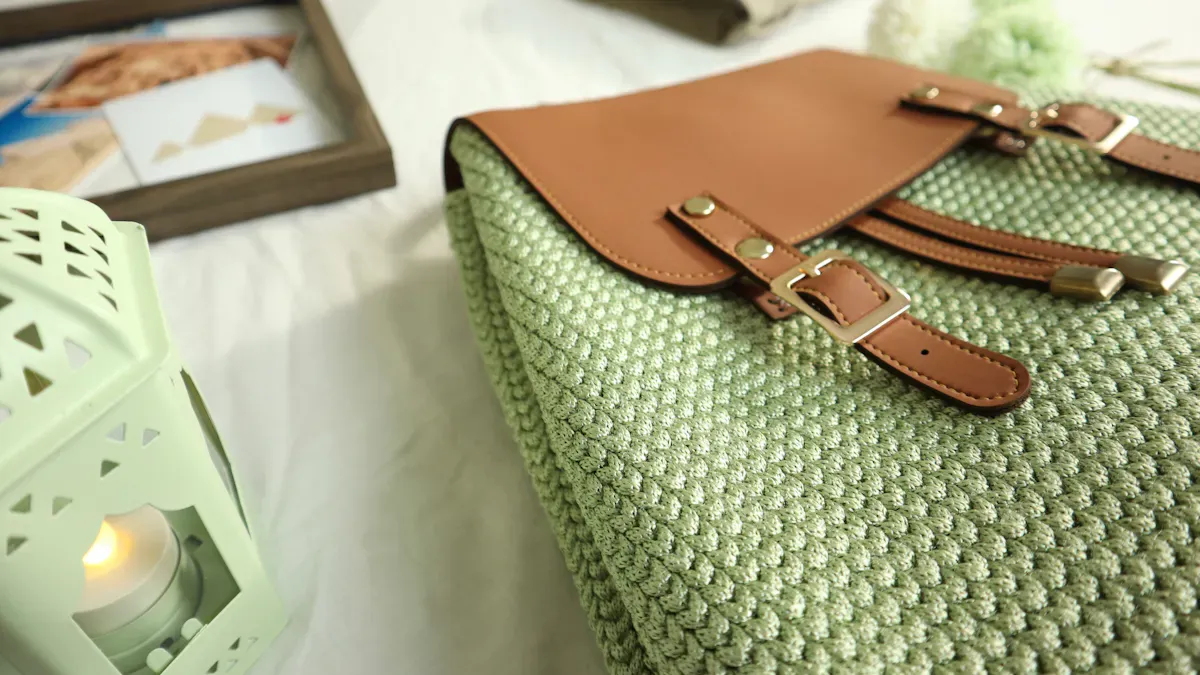
You will find that synthetic leather products offer several advantages over traditional materials. Faux leather fabric resists cracking, fading, and general wear, so your items maintain their appearance longer. Cleaning is simple; you only need a damp cloth to wipe away dirt or stains. This makes faux leather fabric a practical choice for busy lifestyles. Synthetic leather advantages also include cost-effectiveness. Manufacturers and consumers both benefit from lower prices compared to real leather. Faux leather fabric production uses less water and resources, supporting sustainability goals. Many people choose vegan leather or eco-leather for ethical reasons, as these materials do not involve animal products. The versatility of faux leather allows for a wide range of colors and textures, making it a sustainable alternative for many applications.
|
Feature |
Real Leather |
Synthetic Leather |
|---|---|---|
|
Composition |
By-product of the meat industry |
Made from synthetic components (PU, PVC, etc.) |
|
Texture |
Natural grain, may have imperfections |
Uniform, rubbery or shiny surface |
|
Smell |
Distinctive leathery smell |
Cold, plastic smell |
|
Durability |
More durable |
Burns easily, shrinks with heat |
|
Environmental Impact |
Renewable, up-cycled material |
Often less environmentally friendly |
Synthetic leather products require less water to produce than real leather, which supports sustainability and reduces environmental impact.
Disadvantages of Synthetic Leather
Despite the many advantages, faux leather fabric has some drawbacks. You may notice that synthetic leather is less breathable than natural leather. This can cause discomfort, especially in hot or humid conditions. Faux leather does not conform to your body as well as real leather, which affects comfort. Over time, synthetic leather products may show wear, such as cracking or peeling. The typical lifespan of faux leather fabric is 2-3 years, while full-grain real leather can last for decades.
-
Synthetic leather is less breathable, trapping heat and moisture.
-
Faux leather may not feel as soft or flexible as natural leather.
-
Imitation leather products can develop odor due to trapped moisture.
|
Feature |
Faux Synthetic Leather |
Full-Grain Real Leather |
|---|---|---|
|
Lifespan |
2-3 years typical lifespan |
Decades with proper care |
|
Aging Process |
Maintains original appearance, then degrades |
Develops rich patina, becomes more beautiful |
|
Durability |
Noticeable wear after 18-24 months |
Improves with age |
Everyday Uses in Fashion
You see faux leather fabric everywhere in fashion. Bags, wallets, belts, and jackets made from synthetic leather products are popular, especially among young people in cities. The demand for vegan and sustainable alternatives drives this trend. Leading brands like Stella McCartney and Gucci now use vegan leather and eco-leather in their collections. Faux leather applications in fashion include shoes, skirts, and even hats. PU synthetic leather and pleather allow designers to create innovative styles at both budget and luxury levels.
The rise of faux leather fabric in fashion reflects a shift toward cruelty-free and sustainable choices.
Furniture and Upholstery Applications
Faux leather fabric is a top choice for furniture and upholstery. You benefit from its durability, low cost, and easy maintenance. Eco-leather and pleather sofas, chairs, and headboards resist stains and fading, making them ideal for busy homes. Faux leather fabric offers a wide range of textures and colors, so you can match any décor. The adaptability of synthetic leather products supports sustainability and appeals to consumers who want a sustainable alternative to animal-based materials.
Automotive and Accessories
Synthetic leather products play a major role in automotive interiors. You find faux leather fabric in car seats, door panels, and dashboards. These applications offer durability, easy cleaning, and a polished look. Faux leather allows for customization in color and texture, which real leather cannot match. Accessories such as phone cases, sports equipment, and electronics casings also use imitation leather and eco-leather for their lightweight and insulating properties.
-
Seat Upholstery: Faux leather fabric provides a durable, stylish surface for car seats.
-
Interior Trim: Door panels and dashboards use synthetic leather for a cohesive design.
-
Custom Options: You can choose from many colors and textures for a personalized look.
Synthetic leather products in automotive and accessories offer a sustainable alternative to traditional materials, supporting both style and sustainability.
You now understand synthetic leather’s definition, how it differs from real leather, and its main uses. The market keeps growing, as shown below:
|
Source |
Growth Rate |
Period |
|---|---|---|
|
Future Market Insights |
2025-2035 |
|
|
IMARC Group |
3.28% |
2026-2034 |
|
Precedence Research |
7.78% |
2026-2035 |
|
Markets and Markets |
5.33% |
2024-2029 |
Many people choose synthetic leather for ethical reasons:
-
You support animal welfare and vegan values.
-
You avoid animal products while enjoying stylish goods.
Consumer interest in sustainability keeps rising, especially among younger buyers. Synthetic leather’s carbon footprint is lower than real leather:
|
Material |
Carbon Footprint (kg CO2e/m²) |
|---|---|
|
Cow Skin Leather |
110.0 |
|
Real Leather (after processing) |
17.0 |
|
Synthetic Leather |
15.8 |
You play a role in shaping a more ethical and sustainable future by learning about these materials.
FAQ
What is the best way to clean synthetic leather?
You should wipe the surface with a damp cloth. For tough stains, use mild soap and water. Avoid harsh chemicals to prevent damage.
Can you recycle synthetic leather products?
Most recycling centers do not accept synthetic leather. You can try to upcycle old items or donate them if they remain in good condition.
Does synthetic leather crack or peel easily?
Synthetic leather can crack or peel over time, especially with heavy use or sun exposure. You can extend its life by keeping it clean and conditioned.